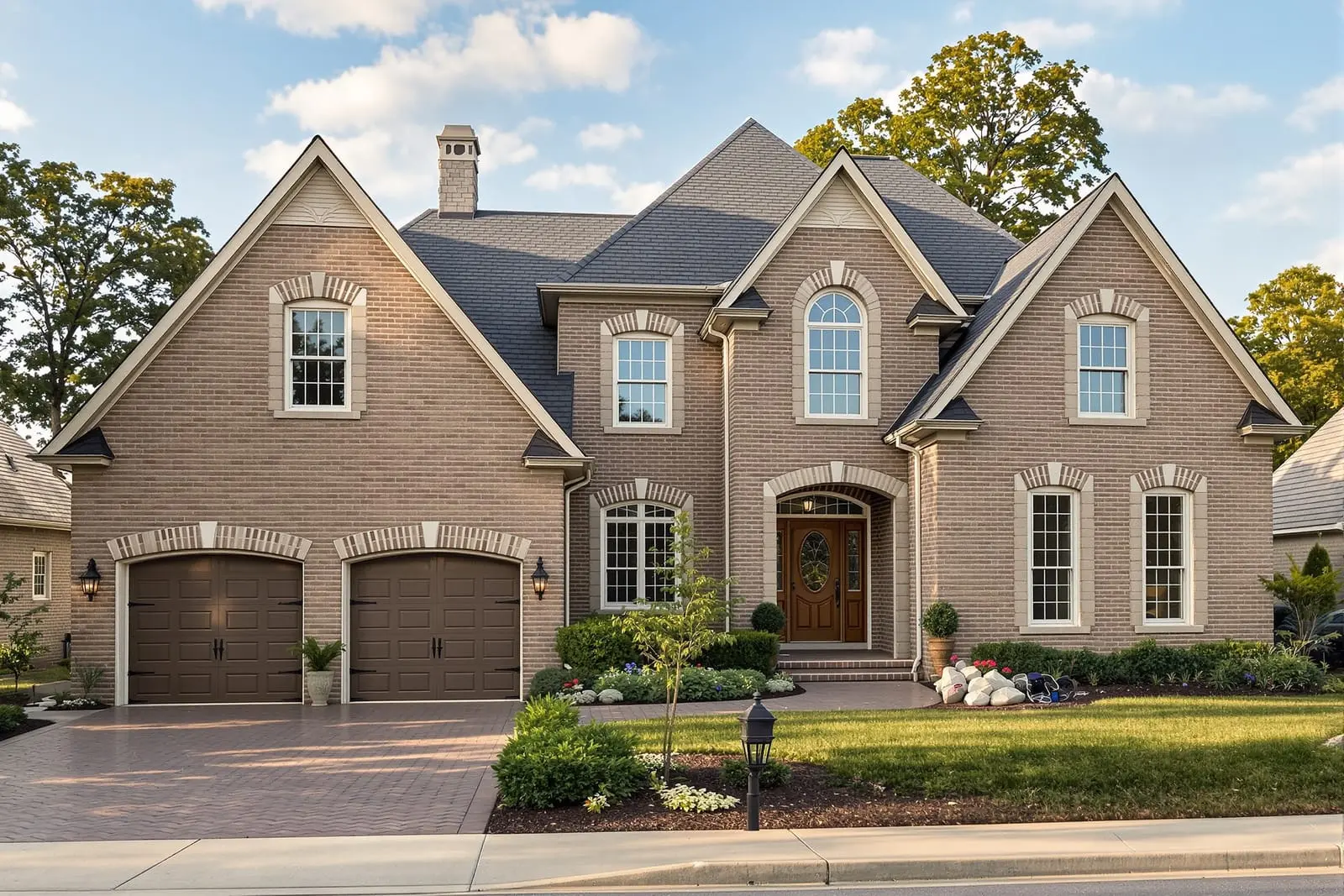
We provide professional tuckpointing in Cleveland, OH to restore cracked or deteriorated mortar joints in brick and stone. Our team carefully grinds out damaged joints and installs new mortar matched in color and profile. Proper repointing seals out moisture, strengthens the wall, and refreshes the appearance of your masonry for years to come.
Primetime Masonry Cleveland provides professional tuckpointing throughout Cleveland, OH and the surrounding area. Our licensed, insured crew delivers safe, clean, on-time work with a free estimate before anything begins. Call (216) 859-1307 or request your free quote.
Protecting Your Brickwork With Expert Tuckpointing in Cleveland
Cleveland’s freeze-thaw cycles are tough on brick and mortar. Moisture works into small cracks in your mortar joints, then expands when it freezes. Over a few winters, those hairline cracks can turn into crumbling joints, loose bricks, and water leaks inside your home or building. Tuckpointing is the process that stops this damage before it becomes a structural or safety issue.
At Primetime Masonry Cleveland, we focus on extending the life of your existing brickwork rather than pushing unnecessary rebuilds. Tuckpointing and repointing involve carefully removing deteriorated mortar and installing new mortar that bonds tightly, sheds water, and matches the surrounding brickwork. When done correctly, this restores strength, improves appearance, and can add decades of life to your chimney, walls, steps, and parapets.
You will notice you may need tuckpointing if you see sandy mortar that brushes out with your finger, visible gaps between bricks, water stains on interior walls near brick surfaces, or bits of mortar and brick collecting at the base of a wall. In Cleveland, these issues are common on older brick houses in neighborhoods like Lakewood, Ohio City, and Old Brooklyn, and on chimneys that have seen years of lake-effect weather.
Our role is to inspect those conditions honestly, explain what is happening, and give you a clear plan to fix it. We do not treat tuckpointing as a cosmetic quick fix. Done properly, it is a structural repair that protects your investment and prevents more expensive rebuilding later.
Our Step-by-Step Tuckpointing and Repointing Process
Every project with Primetime Masonry Cleveland begins with a close inspection. We start by identifying all areas of loose or failing mortar, noting any cracks that pass through bricks rather than through mortar, and checking for moisture paths such as missing chimney caps or failing flashing. We photograph key areas so you can see exactly what we see.
Next, we prepare the joints. Using grinders with dust control and hand chisels, we remove deteriorated mortar to a consistent depth, typically 3/4 inch to 1 inch or until sound material is reached. This step is slow and controlled. We do not simply smear new mortar on the surface. Deep removal gives the new mortar enough bite to lock into the joint and prevents premature failure.
Once the old mortar is removed and debris is brushed or blown out, we lightly dampen the joints. This step is important because it keeps the surrounding brick from pulling moisture out of the new mortar too quickly. On hot or windy Cleveland days, we may mist the surface more than once to maintain the right moisture level for proper curing.
We then mix new mortar that matches your existing wall. On older Cleveland homes, this often means using a softer lime-rich mortar so we do not damage historic brick. For newer homes, we match modern Type N or Type S mortars depending on the structural load and exposure. We also custom blend sand to match the color and texture of the original joints.
Our masons pack the fresh mortar firmly into the joints in layers as needed, eliminating voids. Joints are then tooled to the correct profile, such as concave, flush, or struck, depending on what is already on your home. Proper tooling compresses the surface of the joint so it sheds water and looks uniform.
Finally, after initial set, we clean the brick faces by hand to remove smears, taking care not to wash out the fresh joints. On many projects, we return the next day for a final check and light cleanup once the mortar has stiffened, so your brickwork looks sharp, not hazy or streaked.
True Tuckpointing vs. Repointing and What You Actually Need
People often use the word tuckpointing to cover any work on mortar joints, but there are important differences. Primetime Masonry Cleveland will explain which method fits your brickwork so you are not paying for work you do not need.
Repointing is the structural repair process. Old or failed mortar is removed and replaced with new mortar that is matched in strength and composition. The goal is stability and weather protection. Most Cleveland chimneys, porches, foundations, and brick walls that are spalling or leaking need repointing.
True tuckpointing is both structural and decorative. It involves using two different mortar colors to mimic very fine joints and elevate the look of the brickwork. Typically, a mortar close to the color of the brick is used to fill the joint, then a thin, straight line of a contrasting color, usually white or light, is applied in the center to create the appearance of very crisp, tight joints.
This style shows up on historic or higher end masonry in older Cleveland neighborhoods, especially on early 1900s facades. If your home or building has this look and it is badly worn, we can reproduce it by carefully matching both colors and line widths. Not every wall that has failing mortar justifies the extra detail of true tuckpointing, so we will break down the costs and visual benefits and let you decide.
Sometimes the best solution is a combination. For example, a chimney that no one sees from the street may only get straightforward repointing, while the front-facing brick veneer around the entry might receive full tuckpointing for a sharper, restored appearance. We tailor the method to each section of the structure so that you get value where it matters most.
Cost Factors for Tuckpointing in Cleveland and How We Estimate
Homeowners often ask, “What does tuckpointing cost per square foot in Cleveland” but honest pricing depends on several specific conditions. Primetime Masonry Cleveland walks you through these factors so you know where your money is going.
Accessibility has a major impact. Ground-level masonry or short porch walls are simpler and need minimal setup. Tall chimneys, 2 or 3 story walls, or lakefront properties with difficult terrain require scaffolding or lift equipment. In Cleveland, work on narrow side yards in areas like Tremont or Detroit Shoreway can require more setup time to secure safe working platforms.
The depth and extent of deterioration also matter. Light surface cracking with mostly sound mortar may allow for more limited joint removal. Severely eroded or hollow joints, or mortar that has separated completely from the brick, require deeper cutting and more labor. If we discover loose bricks or bulging sections of wall, additional rebuilding or anchoring may be required beyond simple tuckpointing.
Material selection plays a role as well. Standard repointing with a common mortar mix usually costs less than custom color matching or historically appropriate lime mortars. Detailed decorative tuckpointing, where we apply contrasting fine lines, is more labor intensive and is priced accordingly.
Environmental and timing factors influence scheduling and sometimes price. Tuckpointing should not be done in freezing temperatures or when a hard frost is likely during curing. In Cleveland, this can limit work in mid-winter and early spring. If you need a rush project completed between major weather events, weekend or off-hour scheduling may affect the cost.
During our estimate, we measure the affected areas, note access challenges, test the hardness of your existing mortar, and document any related issues such as failing caps or flashing. You receive a written proposal that clearly separates necessary structural repointing from optional cosmetic improvements, along with a realistic schedule based on local weather patterns.
Common Brick and Mortar Problems We Solve in Cleveland
Cleveland’s climate and housing stock create a predictable set of masonry problems, and tuckpointing is a key solution for many of them. Primetime Masonry Cleveland has repaired hundreds of these issues across Cuyahoga County, so we can usually diagnose them quickly.
On brick chimneys, we frequently see mortar that has washed out from years of rain and snow. Joints open up, then water seeps into the brick, leading to spalling faces and interior damage around fireplaces or furnaces. In these cases we often combine chimney tuckpointing with installing or replacing the concrete cap, adding a flue cap, and checking the metal flashing where the chimney meets the roof.
Basement and foundation walls can also show failing mortar, especially in older stone or brick foundations. Homeowners sometimes first notice dampness, efflorescence (white powder on the surface), or crumbling joints behind shelves or along floor edges. Proper repointing with a compatible mortar can help control moisture migration through the wall, although we may also recommend separate waterproofing work if water pressure is high.
Brick steps, porch walls, and retaining walls take a lot of salt and foot traffic during Cleveland winters. Over time, mortar loosens, and bricks can start rocking underfoot. We stabilize these areas by removing loose mortar, resetting any unstable brick units, and repointing joints to restore a solid walking surface. Where salt has caused heavy damage, we may discuss brick replacement along with tuckpointing.
On decorative facades, we often see mismatched past repairs, where a hard, incompatible mortar was used decades ago. This can trap moisture inside softer historic brick and accelerate spalling. In those situations we carefully remove the hard mortar, choose a softer, breathable mix, and repoint in stages so the wall remains stable throughout the repair.
What Cleveland Homeowners Should Know Before Hiring for Tuckpointing
Choosing the right contractor is as important as the mortar itself. Primetime Masonry Cleveland encourages you to ask detailed questions of any company you consider, including us.
First, confirm experience with older Cleveland masonry. Many homes built before the 1940s need softer lime-based mortars, not the standard hard mixes used on new construction. Using the wrong mortar can crack bricks or cause long-term moisture issues. We routinely test existing mortar on older homes to guide our mix design.
Second, ask how dust and debris will be controlled, especially in tight city lots. We use grinders with vacuum attachments where appropriate, lay tarps to protect landscaping, and perform daily cleanup so you are not left with clouds of dust on neighboring properties.
Permitting for tuckpointing alone is not usually required in Cleveland if you are not changing structural elements, but related work like altering a chimney height, rebuilding a structural wall, or working on multi-family or commercial buildings may trigger permit or inspection requirements. We can help you determine when a permit is needed and coordinate with the City of Cleveland building department if structural repairs go beyond simple joint work.
If you live in a historic district or have an active HOA, there may be requirements for maintaining original appearance or submitting color samples. We are familiar with working in areas such as Ohio City and other historic neighborhoods and can provide sample joints and documentation to help you get approvals.
Finally, insist on a clear written scope. It should state which walls, sides, or elevations will be repointed, how deep mortar will be removed, what type of mortar will be used, and whether seals, caps, or flashing are included. We include photos with our proposals so you can see exactly where we plan to work and what we are addressing.
With the right plan, tuckpointing is not just a repair, it is a long-term investment in your property’s stability and curb appeal. Primetime Masonry Cleveland is ready to walk you through each step so your brickwork is secure, weather tight, and attractive for many Cleveland winters to come.
“
Professional tuckpointing and repointing, done right the first time, quality materials, honest pricing, and results that last.
Primetime Masonry Cleveland
Tuckpointing and Repointing Across Our Service Area