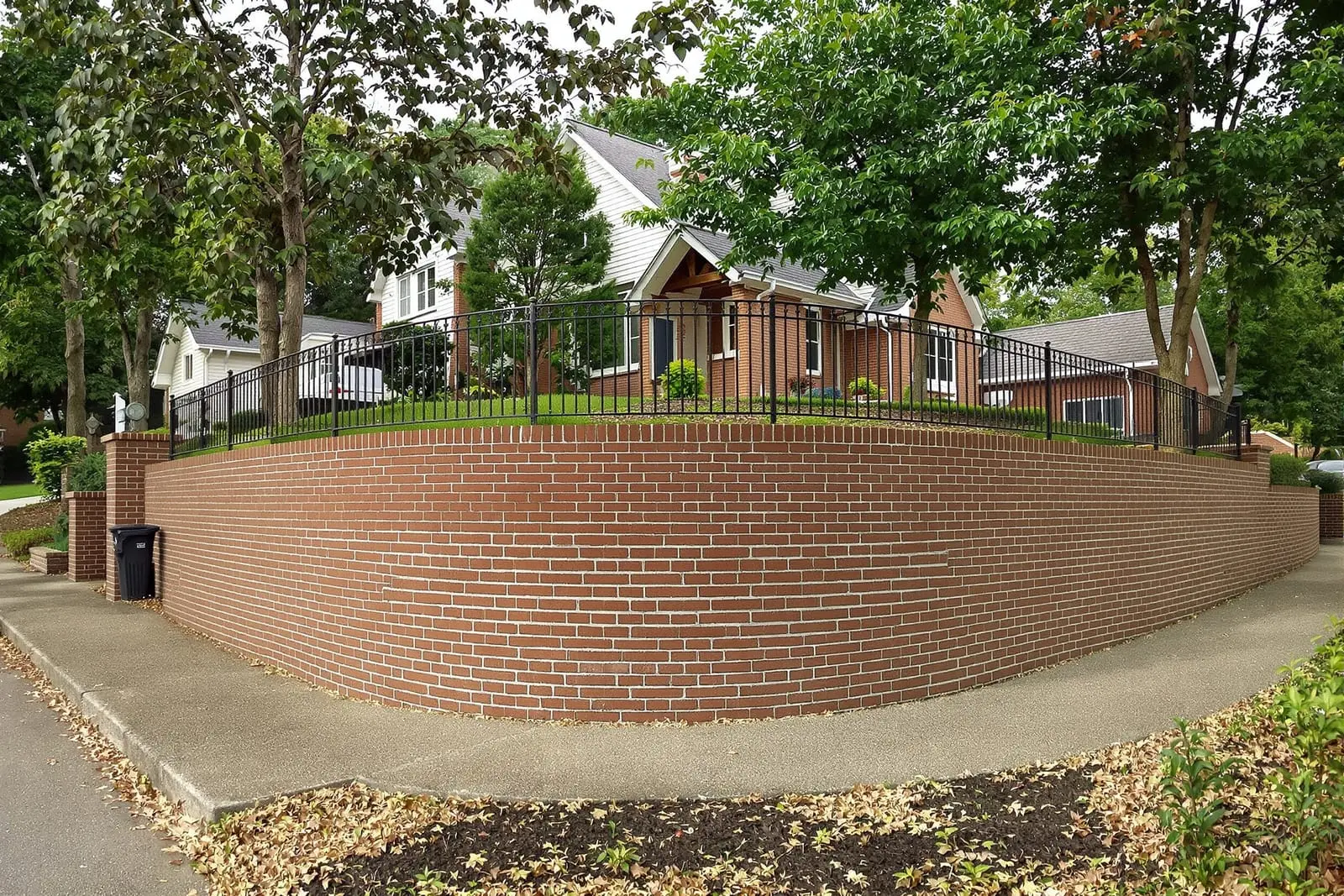
We design and build brick retaining walls in Cleveland, OH that control slopes and define outdoor spaces while adding style. Our team handles drainage, footing design, and reinforcement so your wall stays solid over time. From low garden borders to taller structural walls, we combine function and curb appeal in every brick retaining wall project.
Primetime Masonry Cleveland provides professional brick retaining walls throughout Cleveland, OH and the surrounding area. Our licensed, insured crew delivers safe, clean, on-time work with a free estimate before anything begins. Call (216) 859-1307 or request your free quote.
Brick Retaining Walls Built for Cleveland Soil and Weather
Brick retaining walls do more than hold back dirt. In Cleveland they have to stand up to Lake Erie winds, freeze-thaw cycles, and heavy spring rains without shifting or cracking. At Primetime Masonry Cleveland, we build brick retaining walls that are designed around those exact conditions, not a generic plan from a catalog.
We start by looking at what your wall actually needs to do. Is it keeping a slope from washing out toward your driveway in Parma, holding up a raised patio in Lakewood, or creating flat planting terraces in Cleveland Heights? The height of the wall, the type of soil on your property, and how close it sits to structures or property lines all affect how we design it. We match clay brick, concrete brick, or brick veneer to that design so you get the look you want and the performance you need.
Because our winters are harsh, we only use materials that are rated for repeated freeze-thaw cycles. That includes frost resistant brick, compatible mortar mixes, and properly compacted base stone that drains well. It is not enough for a wall to look straight on day one. It has to stay that way through years of Cleveland winters, lake effect snow, and spring thaws.
Our Step-by-Step Process for Brick Retaining Walls
Primetime Masonry Cleveland follows a very specific build process so your brick retaining wall does not lean, bulge, or separate over time.
1. Site evaluation and layout: We check slopes with a level and laser, look at drainage patterns after rain if possible, and locate underground utilities through Ohio 811. Then we mark the wall footprint, height transitions, and drainage paths so everyone clearly sees the plan on the ground.
2. Excavation and base preparation: For most brick retaining walls we dig down below the local frost line at least for the base footing area so the foundation does not heave in winter. We remove soft topsoil and organic material, then add compacted crushed limestone or gravel in layers. Each layer is compacted with a plate tamper to reach a firm, non pumping base that will not settle.
3. Drainage system: Behind the wall we install perforated drain pipe (often called a French drain) sloped to daylight or a drain outlet. Clean stone is placed around the pipe and up the back of the wall to reduce hydrostatic pressure from Cleveland’s heavy spring and fall rains. A filter fabric is installed between the stone and native soil to keep fines from clogging the stone and pipe.
4. Footing and structural support: For taller or load bearing brick retaining walls we pour a reinforced concrete footing sized to the wall height and soil conditions. Rebar is installed where needed, especially if the wall returns around corners or supports steps or patios.
5. Brick laying: Once the footing cures, we lay brick in courses using a mortar mix that matches both structural needs and your chosen brick type. Joints are consistently tooled so water sheds off rather than sitting in low spots. For higher walls or walls near structures we add reinforcing like vertical rebar tied to the footing and filled cores or bond beams where appropriate.
6. Backfilling and final grading: We carefully backfill in lifts, compacting as we go so the soil behind the wall does not settle and pull away. We shape the topsoil so water flows away from the wall, not toward it, then restore lawns, beds, or hardscape around the project area.
Design Options and Material Choices for Brick Retaining Walls
Your brick retaining wall can look classic, modern, or somewhere in between. Primetime Masonry Cleveland helps you choose materials that fit your house, your yard, and Cleveland’s climate.
Brick types: We work with solid clay brick, concrete brick units, and brick veneer systems over concrete or block backup. Clay brick gives a timeless look and holds color very well, which is ideal for older Cleveland homes in neighborhoods like Tremont or Ohio City. Concrete brick can offer more uniform shapes and some modern textures. Veneer over a structural block wall can be a smart option for taller walls where structural strength is critical but you still want the warmth of brick.
Colors and blends: We can match existing house brick fairly closely or intentionally contrast it. Many Cleveland homeowners like warmer reds and browns that hide road dust and winter grime. Blended brick (multiple colors mixed on the wall) can soften the look of a tall retaining wall and help it blend into landscaping.
Layout details: Running bond is most common, but on more decorative retaining walls we can incorporate soldier courses at the top, rowlock caps, or brick pilasters at intervals. For step-down retaining walls on sloped yards, we can create clean transitions that look intentional rather than jagged.
Caps and finishes: A good cap is critical in our climate. Stone or precast concrete caps slightly overhanging the brick help shed water and protect the wall face from direct exposure. We pay attention to drip edges under caps so water does not run down and stain the face of the wall. Where appropriate, especially near sidewalks and driveways in busy parts of Cleveland, we may suggest a breathable masonry sealer that helps resist salt splash while still allowing moisture to escape.
Costs, Timing, and Cleveland-specific Considerations
Homeowners usually want two things up front: what will it cost and when can it be done. Brick retaining walls can vary quite a bit, and Primetime Masonry Cleveland is transparent about the factors that affect your price.
What drives cost: Wall length and height are the biggest factors, but not the only ones. Deeper excavation for poor soil, the need for a concrete footing, complex curves, access issues (tight side yards in older Cleveland neighborhoods), and the type of brick and cap all play a role. Adding integrated steps, multiple tiers, or structural engineering for very tall walls will also add to the budget.
Ballpark expectations: Smaller brick retaining walls under about 3 feet tall that do not require special engineering tend to be on the lower end of the cost range. Taller walls, walls supporting driveways or patios, or walls that require haul away of large amounts of soil will cost more. We are happy to break out line items so you can see where money is going, such as drainage, base prep, and brick upgrades.
Best times of year: In Cleveland it is smart to plan brick retaining wall projects for late spring through early fall. Mortar and concrete behave best when temperatures are above freezing and not extremely hot or wet. We can work in cool weather, but very cold or constantly wet conditions slow curing and increase the risk of frost-related issues. If you want a new wall ready for spring planting, contacting us in late winter often secures a better place in the schedule.
Permits and rules: Some brick retaining walls, especially those over a certain height or near sidewalks and public ways, may need city approval or engineering. We can advise you on what applies in your part of the Cleveland area and help coordinate drawings or permits where required.
Common Problems With Brick Retaining Walls and How We Prevent Them
Many of the calls we get at Primetime Masonry Cleveland involve fixing or replacing brick retaining walls that were not built correctly. Understanding what usually goes wrong will help you spot a good installation.
Poor drainage: The number one issue is water building up behind the wall. In Cleveland, a wet fall followed by a hard freeze can push an under drained wall outward. Signs include bulging sections, leaning, or cracks near the base. We avoid this by installing proper drain tile, stone backfill, and filter fabric, and by making sure water has a clear path to daylight or a drain outlet.
Frost heave and movement: If the base is not deep enough or is built with the wrong materials, the freeze-thaw cycle will lift parts of the wall and create uneven settlement. Our approach of excavating to proper depth and using compacted, free draining base stone instead of un-compacted soil or mixed debris prevents most of these problems.
Mortar and brick damage: Using mortar that is too hard or not designed for exterior, freeze-thaw conditions will cause spalling and joint failure. We select mortar that is compatible with both the brick type and our climate. For older homes where a new wall is meant to complement existing brick, we consider the hardness and absorption of the original masonry so the new work does not age poorly beside it.
Shortcuts on reinforcement: Taller brick retaining walls or walls that support driveways and patios must act like a structural system, not just a stack of brick. Skipping reinforcement or undersizing the footing leads to cracks and movement. We design reinforcement around actual site conditions and intended loads so your wall functions as more than a decorative border.
If you already have a problem wall, we can assess whether it can be repaired with drainage upgrades, partial rebuilding, or reinforcement from behind, or whether replacement is more cost effective. Our goal is to give you a solution that will last through many Cleveland winters, not just a quick cosmetic patch.
“
Professional brick retaining walls, done right the first time, quality materials, honest pricing, and results that last.