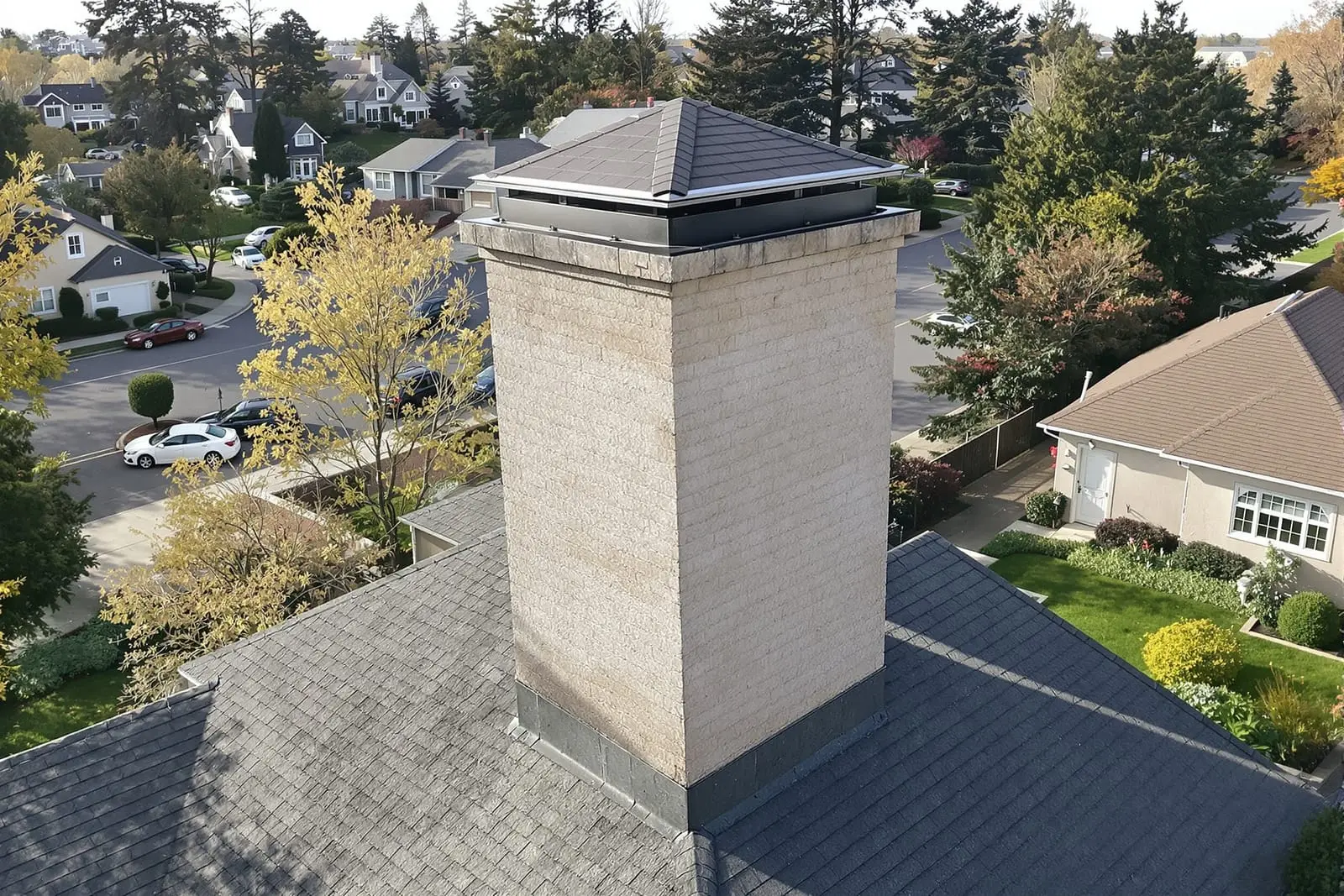
We provide commercial chimney repair in Cleveland, OH for boiler chimneys, smokestacks, and large masonry flues. Our team repairs cracking, spalling, and structural issues at height using proper access systems. From localized brick replacement to full stack rebuilding and caps, we help facilities maintain safe and reliable exhaust systems.
Primetime Masonry Cleveland provides professional commercial chimney repair throughout Cleveland, OH and the surrounding area. Our licensed, insured crew delivers safe, clean, on-time work with a free estimate before anything begins. Call (216) 859-1307 or request your free quote.
Primetime Masonry Cleveland provides specialized commercial chimney and smokestack repair for hospitals, factories, schools, restaurants, and multi‑story buildings throughout Northeast Ohio. Our focus is structural safety, code compliance, and long service life in Cleveland’s freeze‑thaw climate.
Commercial systems are very different from residential chimneys. They are taller, carry higher temperatures or corrosive exhaust, and are tied into boilers, makeup air systems, and rooftop equipment. When we inspect or repair your chimney, we look at how it interacts with your mechanical systems, roofing, and building envelope so that one fix does not create a new problem elsewhere.
Our masons and field technicians are trained to work around active facilities. We coordinate with your maintenance staff, follow site safety protocols, and plan work to reduce downtime. Whether you manage a production line near Slavic Village or a mid‑rise office by Playhouse Square, we put a priority on keeping your building operating while repairs are completed correctly.
Common Commercial Chimney and Smokestack Problems in Cleveland
Local weather and older building stock create a specific pattern of chimney and smokestack failures in Cleveland. Understanding these issues helps you budget and act before a shutdown is forced on you.
Freeze‑thaw damage is the most common masonry problem we see on commercial stacks. Moisture enters cracked mortar joints or spalled brick faces in fall, then expands when it freezes. Over several winters, this widens gaps, bows walls, and can loosen entire wythes of brick. On tall stacks, this often shows up as “shedding” brick fragments onto the roof.
Boiler and commercial kitchen exhaust gases can be highly acidic. Over time, they attack clay flue liners, metal liners, and mortar, especially where condensation occurs near the top of the chimney. We frequently find flue tiles fractured or separated at the joints in schools and older institutional buildings.
Improper previous repairs are another recurring problem. We see residential‑grade sealants used on commercial stacks, hard Portland‑rich mortars smearing over soft historical brick, and concrete caps poured without reinforcement. These shortcuts trap moisture, crack quickly in Cleveland winters, and often cost more to undo than a correct repair would have in the first place.
On industrial smokestacks, steel reinforcement and anchoring can corrode, especially near parapets and rooflines where snow and ice accumulate. Left unaddressed, this can lead to out‑of‑plumb conditions and safety shutdowns ordered after insurance or fire inspections.
Our Commercial Chimney & Smokestack Repair Process
Primetime Masonry Cleveland follows a clear, documented process so you know exactly what is happening to your chimney at every step.
1) Site visit and assessment. We review your concerns, recent inspection reports, and utility or boiler logs if available. For low and mid‑rise chimneys, we perform hands‑on inspection using ladders or lifts. For tall stacks, we use drones or swing‑stage rigging for close visual documentation.
2) Detailed condition report. You receive photos with marked problem areas, notes on structural issues versus cosmetic damage, and our recommendation: repair, partial rebuild, or full reconstruction. We also identify any immediate life safety hazards, such as loose masonry over entrances or parking areas.
3) Repair plan and scheduling. Once you approve the scope, we coordinate access, crane or lift placement, and work hours. For facilities like hospitals or manufacturing plants, we often stage work to avoid shutdowns, timing noisy or dusty steps around your operations.
4) Execution. Depending on your specific chimney, work may include repointing, brick replacement, flue liner restoration, crown rebuilding, anchoring upgrades, or installation of chemical or fiber‑reinforced liners. We keep your facility contact updated daily on progress and any unexpected conditions.
5) Final verification. After repairs, we conduct a final walkthrough with you or your maintenance lead, provide before‑and‑after documentation, and, when appropriate, coordinate with your mechanical contractor or chimney sweep for performance testing before the system is returned to full service.
Specific Repair Services for Commercial Chimneys and Smokestacks
Our team handles focused repair tasks tailored to commercial and industrial chimneys in Cleveland.
Repointing and masonry replacement: We remove deteriorated mortar to the correct depth, typically 2 to 2.5 times the joint width, then repoint with a mortar mix matched to your existing brick or block. On historical or soft brick stacks, we adjust the mix so it is compatible and does not cause future spalling. Severely damaged units are cut out and replaced, tying new masonry securely into existing work.
Crown and cap rebuilding: Many commercial chimneys suffer from cracked or missing crowns that allow water intrusion. We demolish failing concrete caps, install proper reinforcement, form new pitched crowns with drip edges, and use commercial‑grade, vapor‑permeable waterproofing treatments instead of generic silicone coatings.
Flue and liner restoration: For boiler chimneys or restaurant exhausts, we evaluate whether your system is best served by repairing masonry flue tiles, installing stainless steel liners, or using cast‑in‑place liner systems. For high‑temperature or corrosive environments, we may recommend AL29‑4C stainless or engineered refractory lining products, depending on equipment specs and manufacturer requirements.
Structural stabilization: For tall or older smokestacks, we can reinforce with interior or exterior steel, install new guy wires or anchors where appropriate, and correct minor out‑of‑plumb conditions. When structural engineers are required, we work directly with them to implement their design on site.
Waterproofing and weather protection: After repairs, we often apply breathable masonry water repellents, reinforce or replace flashing where the chimney meets the roof membrane, and recommend snow and ice management details that make sense for Cleveland winters.
What Drives Commercial Chimney Repair Cost in Cleveland
Commercial chimney repair costs vary widely, and understanding the main drivers helps you plan realistic budgets.
Access and height are usually the biggest factors. A two‑story boiler chimney at a small office in Parma might only require a boom lift and simple fall protection. A 100‑foot smokestack at an industrial facility near the Cuyahoga River may need cranes, swing stages, or custom rigging, plus additional safety oversight.
Scope of deterioration matters. Limited repointing and brick replacement on a sound structure is relatively economical. Once we see bulging walls, significant lean, or widespread flue damage, costs increase because more demolition, new masonry, and engineering support are required.
Operating constraints also have an impact. If work must be done only on weekends or nights, or if we need to phase work around boiler shutdowns and seasonal heating demands, labor and mobilization costs can rise. Many Cleveland facilities choose to do major chimney work between May and September to avoid heating season interruptions.
Material choices play a part. Standard brick and block are typically less expensive than specialty acid‑resistant masonry or high‑alloy stainless liners. That said, selecting the correct grade for your exhaust temperature and composition will usually save money in the long run by preventing premature failure.
Primetime Masonry Cleveland provides itemized proposals that separate access, labor, materials, and optional upgrades, so you can see exactly where your money is going and adjust scope as needed.
Safety, Compliance, and Coordination With Your Team
Commercial chimney and smokestack repair affects fire safety, air quality, and regulatory compliance. We structure our work so you can document that your system is being maintained responsibly.
Our crews are trained on fall protection, rigging, and confined‑space awareness where applicable. On schools, hospitals, and public facilities, we follow site‑specific security procedures and coordinate material staging so entrances and emergency routes remain clear.
We are familiar with NFPA 211 guidelines and with common inspection requirements from local fire departments and insurance carriers. While we do not act as a code official, we repair in a way that supports safe inspections. When needed, we can bring in structural engineers or coordinate with your mechanical contractor to ensure the chimney is suitable for the connected equipment.
Communication is central on commercial projects. Before work begins, we confirm who on your staff handles maintenance, safety, and building access, and we keep that list informed. If an unanticipated condition surfaces, such as hidden corrosion or flawed previous modifications, we stop, document the issue, and review your options instead of proceeding blindly.
When to Call Primetime Masonry Cleveland for Commercial Chimney Repair
Certain warning signs mean it is time to bring in a commercial chimney specialist instead of waiting for your next routine inspection.
Look for loose or fallen brick on the roof, cracked mortar joints that are wide enough to fit a key or coin, visible leaning of the chimney relative to nearby building lines, or water leaks inside mechanical rooms near the chimney chase. Staining or efflorescence on the exterior, especially near the top third of the stack, can also indicate trapped moisture and liner problems.
Operational clues matter as well. Difficult boiler startups, new drafts in occupied areas, smoke spillage, or repeated nuisance trips on draft or pressure safeties can all point toward chimney issues. In restaurants and commercial kitchens, persistent odor or visible grease staining around rooftop ducts and short chimneys should be addressed quickly.
If you are planning boiler replacement or rooftop unit changes, this is the ideal time to evaluate and repair or upgrade your chimney. Primetime Masonry Cleveland can coordinate with your mechanical contractor so that chimney repairs, new liners, and equipment commissioning stay on the same schedule.
Contact us before small defects become major structural problems. A focused commercial chimney repair now usually costs far less than an emergency rebuild after a failed inspection or weather‑related incident.
“
Professional commercial chimney and smokestack repair, done right the first time, quality materials, honest pricing, and results that last.
Primetime Masonry Cleveland
Commercial Chimney and Smokestack Repair Across Our Service Area