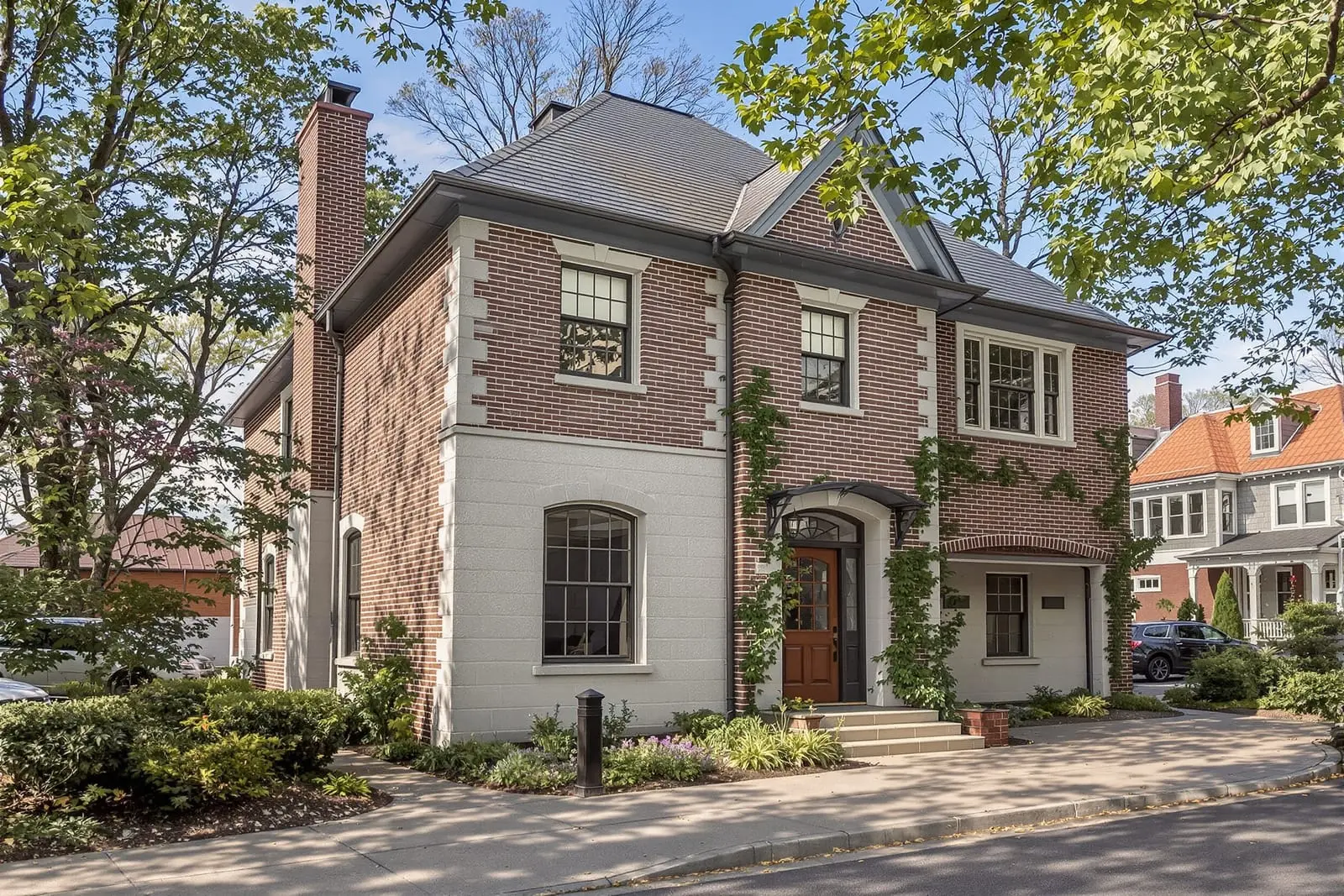
We offer commercial tuckpointing in Cleveland, OH to maintain and repair brick and stone on offices, schools, warehouses, and multifamily properties. Our crew safely accesses elevations and restores failing mortar joints while occupied. With careful scheduling and dust control, we renew commercial facades without disrupting your operations.
Primetime Masonry Cleveland provides professional commercial tuckpointing throughout Cleveland, OH and the surrounding area. Our licensed, insured crew delivers safe, clean, on-time work with a free estimate before anything begins. Call (216) 859-1307 or request your free quote.
Commercial tuckpointing and masonry repair for Cleveland buildings
Primetime Masonry Cleveland provides commercial tuckpointing and masonry repair specifically tailored to Northeast Ohio properties. We focus on occupied buildings, tight downtown sites, and large exterior wall systems, so our crews know how to work around tenants, customers, and ongoing operations with minimal disruption.
Our team handles everything from minor joint repairs on a single facade to full perimeter repointing and structural masonry restoration. We work on office buildings, retail centers, schools, churches, industrial plants, multifamily properties, and historic structures throughout Greater Cleveland. Every project starts with an in-person site evaluation so we can see how Lake Erie weather, freeze-thaw cycles, and past repairs have actually affected your brick, block, or stone.
Commercial tuckpointing is not cosmetic caulking. It is a targeted rebuild of the mortar joints that hold your masonry together. Done correctly, it controls water entry, stabilizes the wall, and can add decades to the life of the structure. Done poorly or with the wrong materials, it can create new cracks, spalling brick faces, and hidden moisture problems inside the wall.
How our commercial tuckpointing process works
On a typical commercial tuckpointing project, Primetime Masonry Cleveland follows a clear, repeatable process so owners and facility managers know what to expect.
First, we survey the masonry elevations and document problem areas, including open or recessed joints, shifting or bulging walls, efflorescence, and interior signs of leakage such as staining around window heads. For larger buildings we often map the facades into grids so you can see exactly where repairs will occur.
Next, we set up access that fits your building and schedule. That might be pipe scaffolding on one elevation, swing stages on a high-rise, or boom lifts for targeted repairs. We coordinate with your safety and facilities staff on barricades, entry rerouting, and off-hours work if needed.
Removal comes before any new mortar is placed. Our masons mechanically cut or grind out deteriorated joints to a proper depth (typically 2 to 2.5 times the joint width), using dust-controlled grinders equipped with vacuum attachments where feasible. We avoid overcutting or damaging brick arrises, which is a common problem when untrained workers use aggressive grinders.
We then clean each joint of debris and dust so the new mortar can bond. Depending on temperature and substrate absorption, we may lightly dampen the joints before placing fresh mortar. The new mortar is packed in by hand in lifts, compacted firmly, and tooled to match the existing joint profile, such as concave, flush, or weathered. The goal is both structural performance and a uniform appearance from street level.
To finish, we brush and clean the work areas, remove excess mortar film, and perform a walkthrough with the owner or manager. On multi-phase projects you get progress updates so you can plan around our work, especially in high-traffic commercial areas.
Local Cleveland conditions that damage commercial masonry
Cleveland’s climate is particularly hard on commercial masonry, and understanding that is key to planning effective tuckpointing and repair. Freeze-thaw cycles are the main culprit. Water enters hairline cracks and porous mortar in fall and early winter, then freezes and expands. Over repeated cycles, this loosens mortar, pops brick faces, and opens gaps at shelf angles and window heads.
Lake-effect moisture and wind-driven rain also push water deeper into walls than you might expect. On buildings near the lakefront or along open corridors like I-90, we often see heavier deterioration on the windward elevations, especially higher up where driving rain is strongest.
Deicing salts used in parking lots, loading docks, and walkways are another regional issue. Salt-laden splashes attack masonry at the base of walls, columns around parking structures, and stair and entry systems. Over time, this leads to crumbling mortar and spalling block. Primetime Masonry Cleveland selects mortar types and, where appropriate, protective coatings that account for these conditions.
Finally, many Cleveland commercial buildings have a mix of original masonry and later additions or repairs. We see hard, high-strength mortars used to patch softer original brick, especially on buildings from the early 1900s in neighborhoods like Ohio City and Asiatown. This hardness mismatch traps moisture and accelerates brick damage. Our approach includes testing and visual assessment to match mortar strength and breathability to the existing masonry, not just picking one universal mix for every wall.
Commercial tuckpointing is just one part of keeping a masonry building watertight and safe. Primetime Masonry Cleveland offers a complete set of masonry repair services so related issues get addressed at the same time, instead of failing again a few winters later.
We replace individual damaged bricks, CMU units, and stones where faces have popped off or units have cracked through. This involves carefully removing the failing unit, cleaning the surrounding cavity, and resetting a new, color-matched unit in compatible mortar. For older facades, we source brick from regional suppliers who understand Cleveland’s older clay colors and sizes, rather than using obviously mismatched stock.
We repair and, when needed, rebuild masonry parapet walls and copings. These are high-exposure elements that often cause leaks far inside the building. Our crews re-anchor loose parapets, install through-wall flashing if missing, and reset or replace stone, precast, or metal copings with proper slope and sealed joints.
Shelf angles and lintels are another common trouble spot on commercial structures. Rust-jacking from corroded steel can push masonry upward and outward, creating horizontal cracks and displacement. We expose the steel, assess its condition, clean or replace it as needed, treat it for corrosion, and re-bed the masonry with appropriate flashing and weeps so water does not accumulate again.
Where water has already penetrated into the wall system, we may recommend targeted sealants at control joints, window perimeters, and transitions between materials. The goal is an integrated repair approach that combines tuckpointing, unit replacement, structural corrections, and selective sealing, so the building functions as a system instead of a patchwork of one-time fixes.
What affects the cost of commercial tuckpointing in Cleveland
Owners and managers often ask why pricing varies so much between commercial tuckpointing bids. Primetime Masonry Cleveland is straightforward about the factors that drive cost so you can compare proposals accurately.
Access is usually the largest variable. A single-story retail strip along Pearl Road with straightforward lift access costs far less per square foot than a downtown mid-rise that requires swing stages, sidewalk canopies, and coordination with adjacent properties. High-rise work or lakefront towers can involve wind restrictions that slow production.
The extent and depth of deterioration matters too. Light, surface-level joint erosion might only require shallow cutout and repointing, while long-standing water infiltration or salt exposure at ground level may require deep removal, unit replacement, corrosion treatment at embedded steel, and more extensive cleanup.
Material selection also affects costs and performance. For historic buildings we may specify custom-color mortars, lime-modified mixes for breathability, and specialty brick or stone. On newer block and brick veneer structures we might use higher-strength mortars but still ensure they are not harder than the units themselves. Cheaper, one-mix-fits-all approaches can save in the short term but risk premature cracking and damage.
Logistics and scheduling are the remaining pieces. Working nights or weekends, sequencing work around retail hours, or coordinating with other trades such as roofers or window installers can increase labor time but may be essential to minimize tenant impact. We walk you through options and show how different access or phasing plans influence your total investment.
How we match mortar and appearance on active commercial sites
Commercial buildings in Cleveland are rarely uniform. One elevation might be original 1920s brick, another a 1980s addition, and the loading dock a block infill from the 2000s. Primetime Masonry Cleveland takes appearance seriously, because mismatched joints or brick colors are noticeable from the street and can hurt tenant perception.
Before production work, we create one or more test areas in non-prominent locations. These mockups let you see how the new mortar color, tooling profile, and joint width look when cured. We adjust sand blends, pigment levels, and joint tooling until the repair blends with the existing wall from normal viewing distance.
We also coordinate around ongoing operations. On retail and hospitality properties, we plan work to keep primary entrances and signage visible and safe, using clear barricades and signage for any temporary reroutes. For schools and healthcare facilities, we schedule noisy grinding and cutting outside critical hours where possible.
Dust and debris management is an important part of appearance on active sites. Our crews use vacuum-assisted grinders where practical, collect debris at the source, and protect nearby glass, vehicles, and landscaping. This attention to cleanliness reduces cleanup expenses for you and avoids complaints from tenants and visitors.
The result is tuckpointing and masonry repair that extends the life of your building without drawing attention to itself. People notice that the property looks solid and well kept, not that a patch job was done.
What Cleveland owners should ask before hiring a tuckpointing contractor
Choosing the right commercial tuckpointing contractor in Cleveland is as important as the scope of work. Primetime Masonry Cleveland recommends that you ask any bidder detailed, technical questions so you can separate true masonry specialists from general contractors who occasionally handle brick.
Ask how they determine mortar type and strength. A qualified contractor should talk about testing or at least field evaluation of existing mortar, considerations of brick or block hardness, and the balance between strength and flexibility. If the answer is that they use the same mix on every building, that is a red flag.
Request specifics on access methods and safety. For multi-story work, you should hear clear plans related to scaffolding, lifts or swing stages, tie-offs, and site protection for pedestrians and vehicles. Ask how they will phase the work to keep your building operational.
Have them explain their joint preparation and depth standards. Listen for details like minimum cutout depth, dust control, joint cleaning, pre-wetting, and tooling techniques. Vague statements about “filling cracks” or “touching up mortar” indicate superficial work that will not last.
Finally, ask for Cleveland-area project examples that resemble your building type, not just photos from other cities. A contractor who regularly works on local schools, warehouses, lakefront towers, or historic commercial blocks will understand the specific weather patterns, salt exposure, and building assemblies found here.
If you want a clear, technically sound plan for your commercial tuckpointing and masonry repair project, Primetime Masonry Cleveland is ready to walk your property, discuss options, and provide a detailed scope and estimate.
“
Professional commercial tuckpointing and masonry repair, done right the first time, quality materials, honest pricing, and results that last.
Primetime Masonry Cleveland
Commercial Tuckpointing and Masonry Repair Across Our Service Area